Machines for the Abyss: How Submersibles and ROVs Explore the Deep
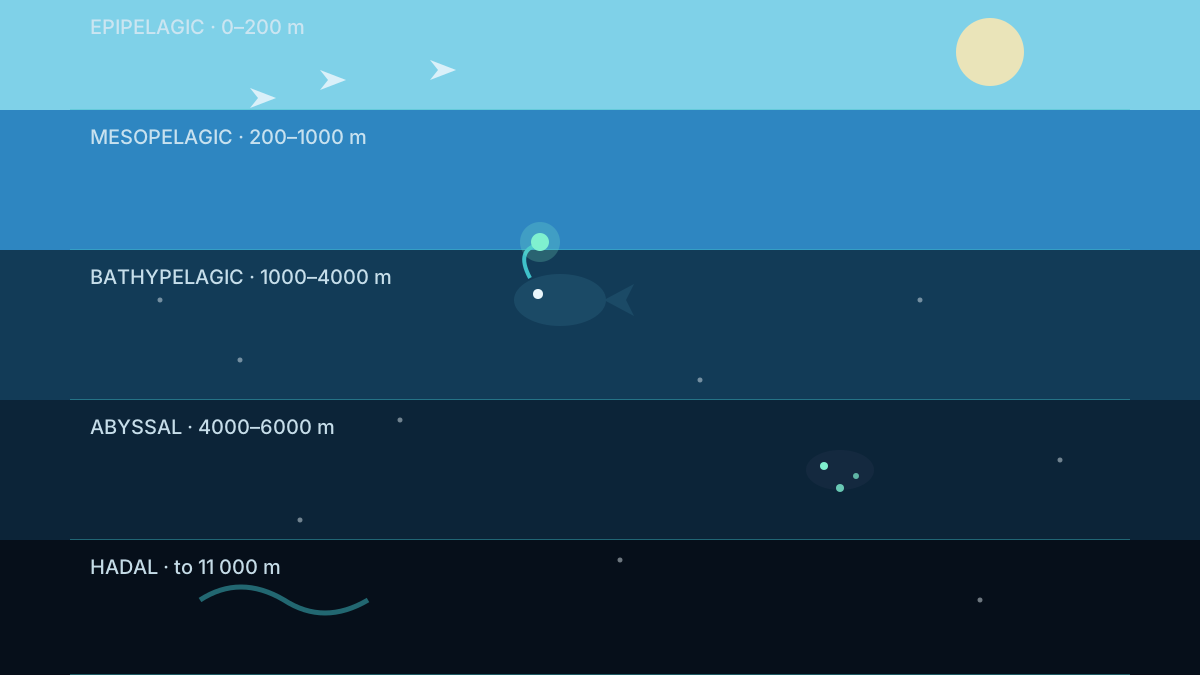
The deep sea is not hard to reach because it is far away — the seafloor is closer than most airports. It is hard to reach because of pressure, cold and total darkness. Everything humans know about the abyss arrived through machines built to survive all three at once.
The pressure problem
Pressure rises steadily with depth, and at the bottom of the deepest trenches it is immense. Engineers answer with shape and material: spheres and cylinders distribute force evenly, titanium and specialized steels resist it, and sensitive equipment is often housed in oil-filled containers so there is no air space to crush.
Three families of vehicle
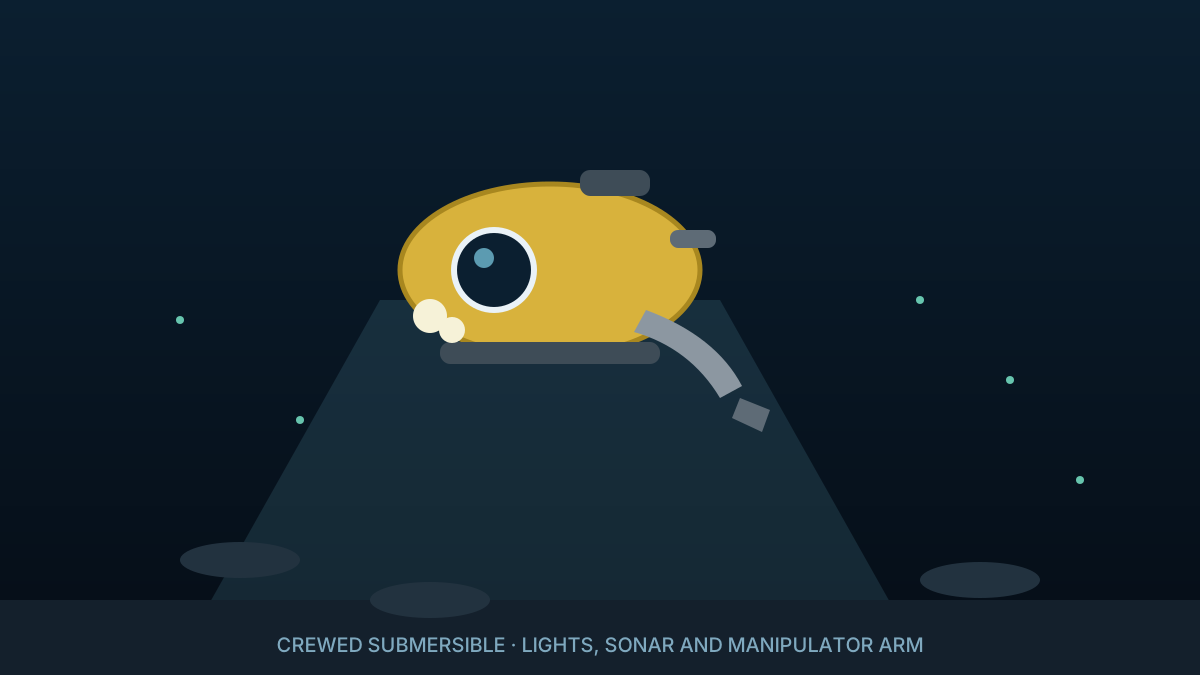
Crewed submersibles carry people down in a pressure sphere, offering direct human judgment at the cost of risk and expense. ROVs — remotely operated vehicles — hang from a cable and are flown by a pilot on the ship above, allowing long dives and heavy manipulator work. AUVs cut the cable entirely and run programmed missions alone, mapping wide areas efficiently.
Light, eyes and hands
Because sunlight never arrives, every vehicle brings its own: powerful LED arrays, high-sensitivity cameras and sonar that maps terrain where cameras cannot see. Manipulator arms collect samples with surprising delicacy, and suction samplers gather fragile animals that a grab would destroy.
Why we keep going down
Deep vehicles have found hydrothermal vents, mapped shipwrecks, inspected pipelines and cables, and identified species unknown to science. Mapping the seafloor is a global scientific effort precisely because so much of it remains uncharted at useful resolution — and you cannot manage or protect what has never been surveyed.
Conclusion
Every photograph of the abyss is really a photograph of engineering. The animals were always there; what changed is that we finally built machines patient and strong enough to visit them.
Frequently Asked Questions
What is the difference between an ROV and an AUV?
An ROV is remotely operated through a cable from a ship, with a pilot in real time. An AUV is autonomous: it follows a programmed mission with no cable and no pilot.
How do submersibles resist the pressure?
With thick spherical or cylindrical pressure hulls, usually of titanium or steel, plus syntactic foam for buoyancy and oil-filled housings for equipment.
Why are deep-sea vehicles so brightly lit?
Because no sunlight reaches those depths at all. Every image humans have of the deep seafloor exists only because a machine carried its own light there.
Sources & Further Reading
Last updated: 6 August 2026