Whale Fall: How a Single Death Feeds the Deep for Decades
In the deep sea, food usually arrives as marine snow: a slow, thin drizzle of particles from far above. Then, occasionally, a hundred tonnes of it lands at once. A whale fall is the single largest meal the deep ocean ever receives, and it creates a community that can outlive the humans who discover it.
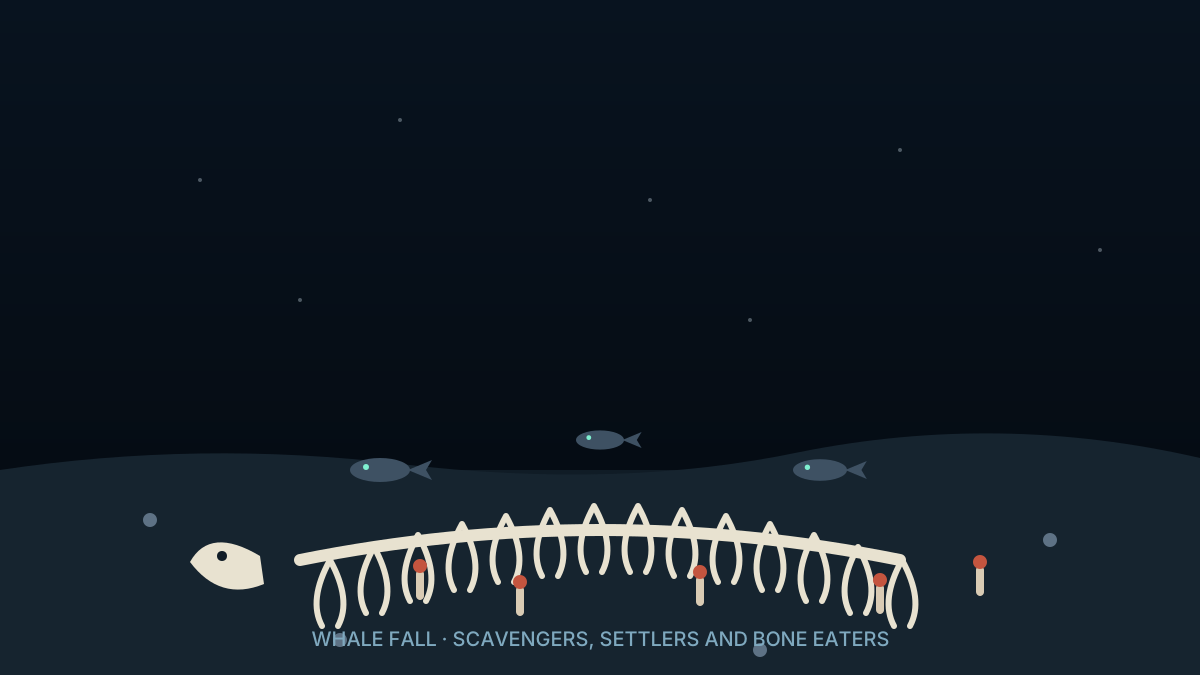
Stage one: the scavengers
Within hours of a carcass settling, mobile scavengers arrive from far away, guided by scent trails in the water — sleeper sharks, hagfish, rattail fish and swarms of amphipods. During this stage the soft tissue disappears at a remarkable rate, sometimes stripping most of the body within months.
Stage two: the settlers
What the scavengers scatter, the sediment keeps. Enriched mud around the skeleton is colonized by dense populations of worms, crustaceans and molluscs, feeding on scraps and organic matter for months or years. The patch of seafloor briefly becomes one of the most crowded neighborhoods in the deep.
Stage three: the bone eaters
The longest phase belongs to the skeleton. Whale bones are rich in fats, and specialized organisms move in to exploit them — including Osedax, the so-called bone-eating worms, which have no mouth or gut and rely on symbiotic bacteria to digest bone. Chemical activity here supports communities distantly comparable to those at hydrothermal vents.
Why biologists care
Whale falls act as stepping stones across the abyss, letting specialized species disperse between isolated chemical habitats. Some animals have never been found anywhere else. Because a natural whale fall is almost impossible to find on purpose, researchers have sunk carcasses deliberately and watched them for years — one of the strangest long-term experiments in marine science.

Conclusion
A whale fall turns an ending into an economy. For decades, in permanent darkness, one animal's death funds an entire miniature civilization — and reminds us how tightly the surface ocean and the deep are tied together.
Frequently Asked Questions
What is a whale fall?
The carcass of a whale that has sunk to the deep seafloor, and the temporary ecosystem that develops around it as different communities consume it.
How long does a whale fall last?
Depending on size and depth, the stages can run from months to decades, with the bone-eating phase being the longest.
Why are whale falls important?
In a habitat where food arrives as slow drizzle, a carcass is an enormous windfall — and some species are known only from whale falls.
Sources & Further Reading
Last updated: 6 August 2026